
Baseball has always been obsessed with round numbers. They act like signposts along history’s highway, turning careers into shorthand: 500 home runs, 300 wins, 2,000 hits, 2,000 strikeouts, the list goes on.
These MLB milestones aren’t just statistics; they are cultural benchmarks that often separate legends from merely excellent players in the public imagination. Yet some of the most compelling careers in the sport’s history ended just shy of those magic figures, not because of a lack of greatness, but because baseball rarely grants perfect endings.
MLB’s Most Notable Near-Milestones
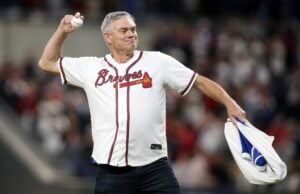
Dale Murphy’s career is one of the clearest examples. A two-time National League MVP and the defining face of the Atlanta Braves during the 1980s, Murphy finished with 398 career home runs. Two swings stood between him and 400, a number that would have altered countless debates about his historical standing. Murphy’s prime featured the total package—elite power, Gold Glove defense, and leadership during a lean era for the franchise—but the absence of those two home runs often overshadows how dominant he truly was.
Pitchers know this cruelty even more intimately. Tommy John, whose name is permanently attached to the surgery that changed baseball medicine forever, retired with 288 wins. In a different era, with heavier workloads and fewer bullpen games, 300 victories may have been inevitable. Instead, John became a symbol of endurance and adaptation rather than a member of an exclusive statistical club. Billy Pierce’s story cuts even sharper: he finished with 1,999 strikeouts. One strikeout—one missed swing—stands between him and a milestone that feels far larger than it actually is.
Modern Examples
Johan Santana’s near miss reflects the fragility of brilliance. At his peak, Santana was unhittable, winning two Cy Young Awards and redefining dominance for left-handed starters in the early 2000s. Injuries shortened his career, leaving him with 1,988 strikeouts, just 12 shy of 2,000. Those missing strikeouts don’t diminish how overwhelming he was when healthy, but they highlight how quickly time can close the door on even the brightest careers.
Alex Rodriguez’s numbers tell a more complicated story. He finished with 696 home runs, four short of 700, a plateau that once felt inevitable for one of the most talented players the game has ever seen. Suspensions and controversy halted his pursuit, freezing his totals in a way that forever altered the perception his career. His near miss serves as a reminder that milestones are not only about ability, but also about availability, circumstance, and choices.
A-Rod’s 500th and 600th homers came on the exact same day three years apart- August 4th pic.twitter.com/jNA4LTQh7t
— BronxBmbrz (@BronxBmbrz) January 10, 2025
More Near Misses
No unfinished statistical story carries more weight than Lou Gehrig’s. When ALS ended his career, Gehrig stood at 493 home runs and 1,995 RBI. Five RBI and seven homers are meaningless next to the courage and grace he showed in his farewell, yet they remain haunting footnotes in baseball history. In Gehrig’s case, the numbers matter least, but they underscore how abruptly greatness can be taken away.
Other stars share similar heartbreak. Fred McGriff retired with 493 home runs, seven shy of 500, while Al Kaline and Andrés Galarraga both ended at 399, each one a swing from 400. Ian Kinsler quietly walked away with 1,999 hits, one base hit short of 2,000, a number that often defines durability and consistency.
These near misses reveal an essential truth about baseball: greatness isn’t always tidy. The sport’s most memorable careers often end not with celebration, but with lingering “what ifs.” And sometimes, being just short makes the legacy even more unforgettable.
Main Photo Credit: G Fiume/Getty Images