
Earlier this week, the San Diego Padres inked highly coveted right‑hander Michael King to a three-year, $75 million contract with opt-out clauses after both the 2026 and 2027 seasons.
That’s huge, not just for the money now, but for what it allows King to do later. Instead of locking himself into a long, team-controlled contract at a set annual value, he has carved out windows where — if he performs like a frontline starter — he can choose “Free Agency 2.0” and test the market again on his terms.
This is exactly the kind of leverage modern stars seek — security now, but optionality later. For a pitcher like King, whose arsenal includes a heavy fastball and a devastating slider, these clauses are more than contractual language — they are a strategic hedge against the volatility that comes with pitching in the big leagues.
Nick Castellanos: A Template for Timing the Market
Back in 2022, outfielder Nick Castellanos walked a very similar path. After a career year with the Cincinnati Reds — where he slashed over .300 with 34 homers and 100 RBI — he opted out of the remaining two years of his contract and hit free agency.
Why does that matter? Because by electing free agency at his peak, he wasn’t just choosing a new team — he was choosing maximum leverage. The result? A five-year, $100 million contract with the Philadelphia Phillies, a deal he simply couldn’t have secured had he stayed in a lesser market or accepted a lesser extend-and-prize earlier.
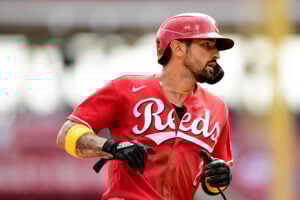
Castellanos bet on himself — and the market rewarded him. His story serves as a blueprint for players who want to control their own narrative, demonstrating the power of timing combined with performance.
Why Michael King Is in a Similar Spot with His New Contract
 Opt‑Outs = Optionality
Rather than signing a 5+ year commitment today, King can walk back into free agency after each of the next two seasons if he pitches like a true No. 1 starter. That means:
-
A breakout campaign in 2026? He hits the market early and shops for a monster long-term deal.
-
Even stronger value in 2027? He can reset again and push for a bigger payday.
Locking into a five-year pact now could cap his future earnings — especially if he emerges as one of MLB’s elite arms.
Welcome back to San Diego, Michael!
We have signed right-handed pitcher Michael King to a three-year contract through the 2028 season. pic.twitter.com/rGvbwcVBBx
— San Diego Padres (@Padres) December 19, 2025
Performance Over Perception
King’s track record — including 201 strikeouts and a 2.95 ERA in recent seasons — shows front-of-rotation promise. Even with a more injury-affected 2025, the potential is there. If he stays healthy and dominant, the opt-outs give him ideal timing to sell high — just like Castellanos did with his bat.
Players Taking Control
This isn’t an accident — it’s a strategic trend. Players today increasingly avoid lengthy, team-friendly extensions, opting instead for short-to-medium term deals with escape valves. It’s leverage theory in action: security now, freedom later.
Castellanos used that blueprint to go from a strong but undervalued slugger in Cincinnati to a premium contract in Philadelphia. King appears poised to do the same on the mound.
Strategic Implications for the Padres
For the Padres, locking King up for three years provides rotation stability, but it also keeps them motivated to maximize his output. A high-performing King could push the boundaries of what a midterm deal looks like for pitchers in today’s market.
If King dominates and opts out, the Padres will face the decision to re-sign him at market value — a scenario that could mirror high-profile pitcher signings seen in recent years. Essentially, this deal gives both player and team a path to mutual benefit while leaving room for upside.
The Last Word
When baseball fans look back on this Michael King contract years from now, here’s the takeaway:
-
King got significant dollars now, but
-
He left the biggest dollars on the table for later, instead of accepting a long, team-friendly lock, and
-
If he stays healthy and dominant, the opt-out clauses could lead to a bigger, market-max contract in a few years — just like Castellanos did with his bat.
Ultimately, King is playing the long game: he’s betting on himself, leveraging his skill, and setting up a potential payday that could dwarf his current deal. For young pitchers and free agents across MLB, this is a masterclass in timing, leverage, and control over one’s destiny. The Padres may have secured a top-tier arm for now, but King may very well write his own headline-making financial chapter in the seasons to come.
Main Photo Credit: Denis Poroy-Imagn Images
The post Betting on Yourself Still Works — and Michael King Is Following a Familiar Blueprint appeared first on Last Word On Baseball.