
The Chicago Cubs have spent the last few seasons searching for rotation stability — not just innings, but impact. Adding Edward Cabrera gives them both.
At 27 years old, Cabrera represents a rare blend of power, upside, and affordability, making him a fascinating fit for a Cubs team trying to turn steady progress into sustained contention. He may be getting traded to Chicago from the forever-selling Miami Marlins.
Cabrera isn’t a finished product. He doesn’t need to be. What he offers is something the Cubs’ rotation has often lacked: electric stuff that can dominate a lineup on any given night.
Elite Stuff That Changes the Dynamic
Cabrera’s appeal starts with raw ability. His fastball routinely sits in the upper-90s, and when paired with a sharp slider and a fading changeup, it gives him true swing-and-miss potential. When he’s right, Cabrera doesn’t just pitch to contact — he attacks hitters.
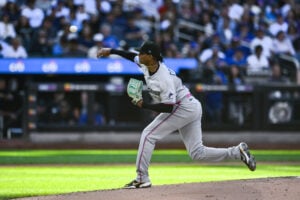
That matters for a Cubs staff that has leaned heavily on command, sequencing, and defense. Cabrera adds a different look entirely. He’s the type of starter who can stop a losing streak, neutralize a hot offense, or flip a series with one overpowering outing.
Strikeouts matter more than ever in October baseball, and Cabrera’s ability to miss bats gives the Cubs something they’ve often had to manufacture rather than rely on.
Where Cabrera Fits in the Cubs’ Rotation
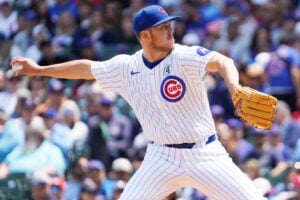
Assuming a healthy staff, Cabrera slots naturally into the middle of the rotation, with room to climb higher. With veterans like Shota Imanaga and Jameson Taillon providing experience and reliability, Cabrera can be deployed strategically — facing aggressive lineups or anchoring series against division rivals.
That role is ideal. It allows Cabrera to pitch without the pressure of being “the ace,” while still giving the Cubs top-of-the-rotation upside every fifth day. If his command continues to improve, it’s not hard to envision him pushing toward the front of the staff.
Equally important, Cabrera has shown he can handle a meaningful workload. Logging over 130 innings last season, he demonstrated progress not just in effectiveness, but in durability — something the Cubs value deeply as they try to protect their bullpen.
A Smart Long-Term Investment
Beyond the on-field fit, Cabrera makes sense from a roster-building standpoint. He’s under team control for multiple seasons, keeping payroll flexibility intact while giving the Cubs a controllable arm entering his prime.
That flexibility matters. Rather than committing big money to aging free agents, Chicago can invest in development — trusting its pitching infrastructure to refine Cabrera’s command and pitch efficiency. If that happens, the Cubs could end up with a frontline starter at a fraction of the typical cost.
At 27, Cabrera is no longer a prospect, but he’s not locked into what he’ll become either. Those are often the most valuable players in baseball.
The Risk — and Why It’s Worth Taking
Cabrera’s career hasn’t been without bumps. Injuries and occasional control issues have prevented him from fully breaking out. Walks have inflated pitch counts. Short outings have tested patience.
But those concerns are exactly why the Cubs are a strong landing spot. With veteran arms around him and no need to carry the staff, Cabrera can focus on refinement instead of survival. Even an incremental improvement in command could unlock a significant leap in performance.
The Last Word: A High-Upside Fit for a Team on the Rise
Edward Cabrera gives the Cubs something they’ve been missing: controlled volatility. He may not dominate every start, but when he’s on, he changes games — and series.
For a Cubs team trying to close the gap in the National League, Cabrera isn’t just rotation depth. He’s a bet on upside, a swing worth taking, and potentially a foundational piece in Chicago’s next competitive window.
If it clicks, this move could be remembered as one of the smartest pitching decisions of the Cubs’ decade.
Top Image Credit: Michael Laughlin-USA TODAY Sports